
Government scam protection hub: Primary guide for fake IRS refunds and agency impersonation. See also Medicare phone scams · doctor payments scam.
Related Government Scam Guides
What Is a Fake Government Refund Scam?
Scammers impersonate government agencies — the IRS, Treasury, Homeland Security, FTC, or United Nations — and claim you are owed compensation from a crackdown on fraudsters. They ask for personal details or fees to “release” your refund. No legitimate agency operates this way.
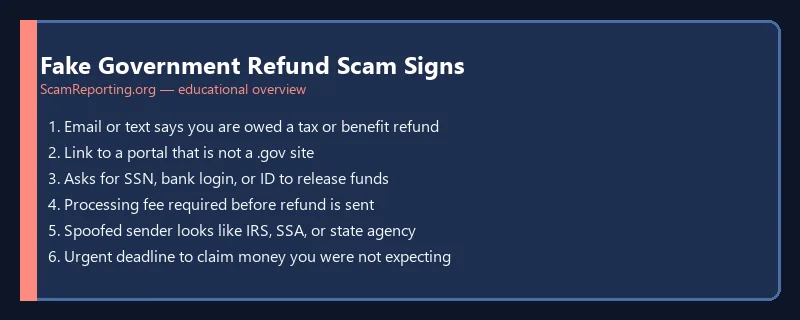
Warning Signs
- Unsolicited compensation for scams you never reported
- Emails from free webmail (Gmail, Aliyun, Yahoo) — not .gov domains
- Requests for bank details, SSN, or ID copies
- Threats to stop communicating with “fake agents” while directing you to a new scammer
- References to large round-number amounts ($1,000,000)
Verified Scam Alerts
- Federal Cyber Center Reimbursement — fake DC3 / Homeland Security compensation
- UN Representative Mr. T.S. Tirumurti — fake UN official
- PNC Bank / Fake Treasury Transfer — impersonated Federal Ministry of Finance
See also: Medicare scam phone calls | Advance-fee fraud hub
What To Do
- Do not reply or click links in the email
- Verify claims by contacting the agency through official websites — not reply addresses
- Report to the FTC and ScamReporting.org
- If you shared banking info, contact your bank immediately — see Get Help
Frequently Asked Questions
Will the government email me about a fraud refund?
Generally no. Agencies like the FTC do not email unsolicited compensation offers. Check how to report scams to the FTC for legitimate channels.
Is the “Federal Cyber Center” a real agency?
Scammers invent official-sounding names. The real Department of Defense Cyber Crime Center (DC3) does not email random compensation offers.
What if the email includes real government letterhead?
Letterhead is easily faked. Verify through official .gov websites, not contact details in the email.
Was this guide helpful?
Your feedback helps us prioritize updates. We do not collect any personal data.
Thanks — recorded.