
Historical record: This report is older than 30 days. While the core tactics remain relevant, scammers may have evolved their methods.
Before you reply or pay
Scammer Lookup → Search the phone number or sender email against published scam reports.
Protection guide: Advance-Fee Fraud Hub
Reviewed by ScamReporting.org Editorial Team · Editorial standards
Scam Analysis: This is an AI voice-cloning impersonation scam (sometimes called a “grandparent scam” variant). Callers use short audio clips from social media to mimic a relative’s voice, claim they are in jail, in an accident, or arrested abroad, and pressure you to send money immediately via wire transfer, Zelle, Bitcoin, or gift cards. Hang up and call the family member directly on a number you already trust — not a callback number the caller provides.
Reported June 2026 — Fraud hotlines and consumer agencies are warning about a surge in AI-generated voice scams targeting families across the United States and Europe.
How This Scam Works
- Voice harvesting: Criminals scrape short videos from TikTok, Instagram, or voicemail greetings to clone a relative’s voice using AI tools.
- Urgent call or voicemail: You receive a panicked message: “Mom, I’m in trouble — I was in a car accident and need bail money. Don’t tell Dad.”
- Fake authority: A second person may pose as a lawyer, police officer, or hospital staff member to add credibility.
- Payment pressure: You’re told to wire funds, send Zelle payments, buy gift cards, or deposit cash into a Bitcoin ATM immediately.
- Secrecy: Scammers insist you must act fast and stay on the line — classic emotional manipulation.
Red Flags
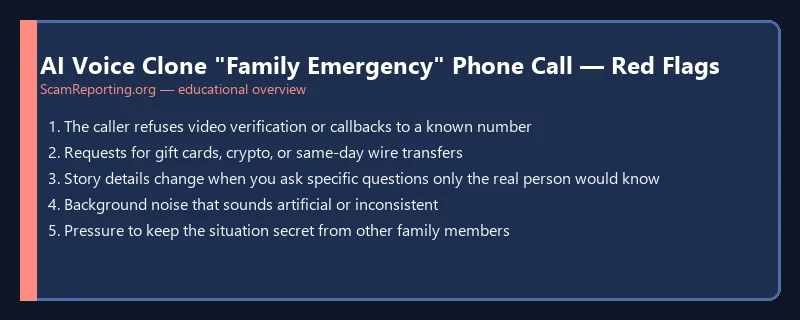
- The caller refuses video verification or callbacks to a known number
- Requests for gift cards, crypto, or same-day wire transfers
- Story details change when you ask specific questions only the real person would know
- Background noise that sounds artificial or inconsistent
- Pressure to keep the situation secret from other family members
What To Do
- Pause — real emergencies allow time to verify
- Call back the family member on a saved contact number
- Ask a verification question only they would know (not something posted publicly online)
- Report to the FTC at ReportFraud.ftc.gov and file a report on our Report a Scam form
Remember: ScamReporting.org is an independent awareness platform — not law enforcement. If you sent money, contact your bank immediately and see our recovery steps.