
What Is a Loan Scam?
Loan scams target people who need money quickly. Fraudsters pose as lenders offering guaranteed approval, low rates, or instant funding — then demand upfront fees, insurance payments, or personal data before any loan is issued.
Warning Signs
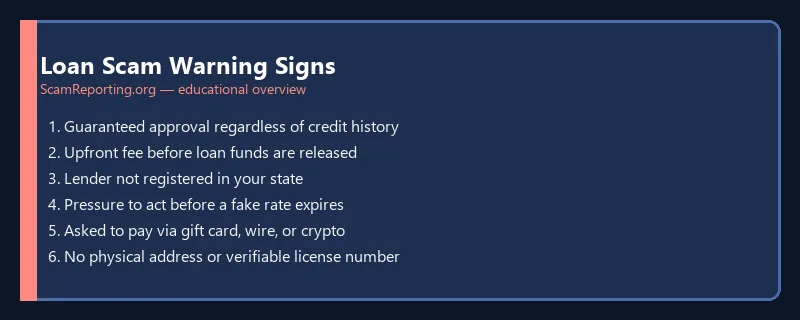
- Upfront fees — legitimate lenders do not require payment before you receive funds
- Guaranteed approval regardless of credit history
- Pressure to act immediately
- Requests for gift cards, wire transfers, or crypto as "collateral" or "processing fees"
- No physical address or license — verify lenders through your country’s financial regulator
- Unsolicited offers via text, email, or social media
Before you pay a “lender”: Use Payment Scam Checker, look up the number in Phone Scam Checker, or browse all tools. Already paid? Recovery Wizard.
What To Do
- Do not send money or share banking credentials
- Verify the lender with your state or national financial authority
- Report the scam on our Report a Scam page
- Contact your bank if you shared account details
If you’ve already paid a fake lender, see our Get Help guide for next steps.
Frequently Asked Questions
Do legitimate lenders charge upfront fees?
No. Real lenders deduct fees from loan proceeds or charge at closing — never before funding.
What should I do if I already paid a fake lender?
Contact your bank immediately, document all communications, and see our recovery guide.
How do I report a loan scam?
File a report on ScamReporting.org and submit a complaint to the FTC.
What is advance-fee loan fraud?
Some fake lenders are advance-fee schemes: they approve you instantly, then demand insurance, processing, or tax payments before releasing funds. This overlaps with advance-fee fraud — see that hub if a “lender” asks for money upfront.
Are online payday loan ads on social media safe?
Treat unsolicited loan offers as high risk. Verify any lender through your state banking regulator before sharing personal or financial information.
Last reviewed: June 2026.
Was this guide helpful?
Your feedback helps us prioritize updates. We do not collect any personal data.
Thanks — recorded.