
Employment scam protection hub: Primary guide for fake recruiters, upfront fees, and work-from-home fraud. See also BEC overlap and unemployment phishing.
Related Employment Scam Guides
What Are Employment Scams?
Employment scams lure job seekers with fake recruiters, remote-work offers, and high salaries — then demand upfront payments for visas, background checks, equipment, or training. Legitimate employers never ask you to pay to get hired.
Warning Signs
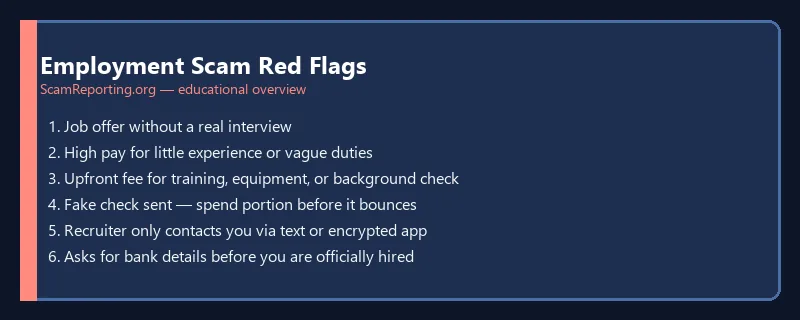
- Unsolicited job offers you did not apply for
- Free webmail addresses (Gmail, Yahoo) instead of company domains
- Upfront fees for visas, training, or “processing”
- Vague company details or impersonation of real employers (oil & gas, logistics, tech)
- Immediate requests for ID, SSN, or bank details before an interview
- Money-mule framing — “receive and forward payments” as a job duty
Common Variations
- Fake overseas recruiters — lucrative roles abroad requiring visa fees
- Work-from-home reshipping — packages used for fraud laundering
- Equipment purchase scams — buy gear from a “vendor” and get reimbursed (you won’t)
- Check-cashing jobs — deposit fraudulent checks and wire funds
Verified Example on ScamReporting.org
- Naph Oil & Gas Canada fake recruitment — impersonated recruiter requesting CVs via free email
- Unemployment benefits guide email scam
What to Do
- Never pay to apply, interview, or onboard
- Verify the employer through official careers pages and LinkedIn company profiles
- Research the recruiter — call the company HR line from their public website
- Protect personal data — do not share SSN or bank info before a verified offer
- Report the scam via our report form
Related Guides
How to Report a Job Scam (Indeed, LinkedIn & More)
If a fake recruiter or job posting targeted you, report it in two places: the platform where you found it, and the fraud agencies that track it.
- Report on the job site. On Indeed, use the “Report Job” link on the listing; on LinkedIn, use the “Report” option on the post or profile. Include the recruiter’s name and any email or payment request.
- Report to the FTC and FBI. File the fraud at how to report internet fraud, which covers ReportFraud.ftc.gov and the FBI’s IC3.
- Protect your data. If you shared bank or SSN details, follow how to report identity theft and freeze your credit.
Never pay for a job, equipment, or “training” up front, and verify any offer directly through the company’s official website.
Frequently Asked Questions
Do real employers ever ask for background check fees?
Some legitimate U.S. employers use third-party screening services, but fees are usually disclosed in writing and paid to named vendors — not via wire or gift cards to an individual recruiter.
Is a job offer via WhatsApp or Telegram always a scam?
Not always, but it is a major red flag when combined with upfront fees, vague employers, or requests to move money.
What if I already paid a fake recruiter?
Contact your bank, save all messages, and see our recovery guide. Report the scheme to help warn others.
How do I verify a company is hiring?
Use the careers section on the company’s official domain — type the URL yourself; do not click links in unsolicited emails.
Was this guide helpful?
Your feedback helps us prioritize updates. We do not collect any personal data.
Thanks — recorded.