
Daily editor note (Sep 4, 2026): We added a quick reminder based on the fraud patterns reported to us this week. See our latest alerts.
Daily editor note (Aug 15, 2026): We added a quick reminder based on the fraud patterns reported to us this week. See our latest alerts.
Daily editor note (Aug 5, 2026): We added a quick reminder based on the fraud patterns reported to us this week. See our latest alerts.
Daily editor note (Jul 26, 2026): We added a quick reminder based on the fraud patterns reported to us this week. See our latest alerts.
Daily editor note (Jul 16, 2026): We added a quick reminder based on the fraud patterns reported to us this week. See our latest alerts.
Daily editor note (Jul 6, 2026): We added a quick reminder based on the fraud patterns reported to us this week. See our latest alerts.
Investment fraud protection hub: Primary guide for pig butchering and crypto investment scams. See also Shark Tank impersonation · recovery room scams.
Pig butchering (also called sha zhu pan) is a long-con investment fraud where scammers build trust over weeks or months, then steer victims into fake cryptocurrency trading platforms. The name reflects how fraudsters “fatten” victims with small fake profits before stealing larger deposits.
This guide explains the warning signs, how the scam works step by step, and what to do if you or someone you know has been targeted.
Related Investment Fraud Guides
What Is a Pig Butchering Scam?
Pig butchering combines romance or friendship grooming with fake investment platforms. Victims are contacted on dating apps, social media, WhatsApp, Telegram, or LinkedIn. After trust is built, the scammer introduces a “guaranteed” crypto or forex opportunity.
Unlike quick phishing emails, these schemes run for 30–90+ days. Scammers may video chat, share daily messages, and even send small “withdrawals” from a fraudulent dashboard to prove the platform is legitimate.
How Pig Butchering Scams Work (Step by Step)
- Unexpected contact: A stranger reaches out with a friendly or romantic opener.
- Platform migration: Conversation moves to WhatsApp, Telegram, or Signal.
- Trust building: Daily chats, shared goals, and fabricated success stories.
- Investment introduction: Victim is shown a fake trading app or website with live charts.
- Small wins: Early deposits appear to grow; small withdrawals may be allowed.
- Big deposit push: Victim is pressured to invest retirement savings, loans, or home equity.
- Exit block: Withdrawals fail due to “taxes,” “fees,” “AML review,” or “VIP upgrade” demands.
- Extortion: Victim may be told to pay more to unlock funds that never existed.
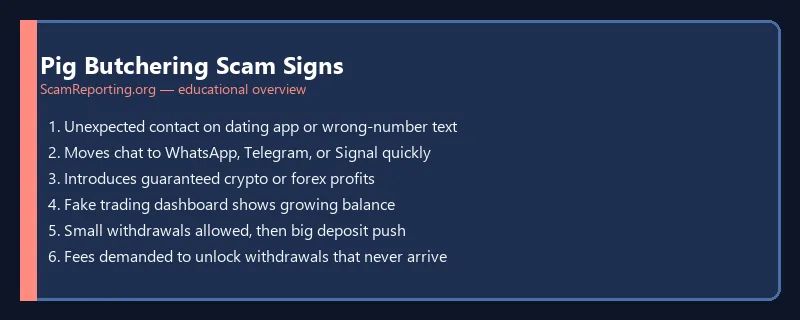
Pig Butchering Scam Signs: Red Flags Checklist
- Unsolicited contact from someone unusually attractive, successful, or helpful online
- Quick move to encrypted messaging apps away from the original platform
- Claims of insider crypto knowledge or guaranteed returns
- Pressure to invest before a “market window” closes
- Trading website with no verifiable company registration or regulatory license
- Dashboard shows profits but withdrawals require extra fees or taxes
- Requests to borrow money, take loans, or hide investments from family
- Instructions to use cryptocurrency ATMs, wire transfers, or P2P apps
- Refusal to meet in person despite an emotional relationship
- “Customer support” on the fake platform coaches you to deposit more
Romance Grooming vs. Investment Fraud
Many pig butchering cases begin as romance scams. The emotional bond lowers skepticism. Even if there is no romance angle, scammers use the same social engineering tactics: urgency, secrecy, and artificial expertise.
If someone you met online discusses crypto profits before you have met them in real life, treat it as a high-risk signal — not an opportunity.
Fake Trading Platforms: What to Verify
Before sending money to any investment site, verify:
- Domain age: Newly registered domains are a major red flag
- Regulatory status: Check SEC, FINRA BrokerCheck (US), FCA (UK), or your local regulator
- Company address: Search the address — many fake firms use mail drops
- App store presence: Fraudulent apps are often sideloaded, not in official stores
- Withdrawal test: Legitimate brokers do not require upfront “tax” payments to release your own funds
What to Do If You Think You Are Being Targeted
- Stop sending money immediately — including “fees” to unlock withdrawals
- Do not install remote access apps (AnyDesk, TeamViewer) at their request
- Screenshot everything: chats, wallet addresses, URLs, and transaction IDs
- Contact your bank if you wired funds or used debit/credit cards
- Report to authorities: FBI IC3 (US), Action Fraud (UK), or your national cybercrime unit
- Warn others via our report form or community forum
See our full fraud recovery guide for a step-by-step checklist after financial loss.
How Pig Butchering Differs from Other Investment Scams
| Scam type | Typical timeline | Main hook |
|---|---|---|
| Pig butchering | Weeks to months | Trust + fake crypto platform |
| Ponzi / HYIP | Days to weeks | Referral bonuses, guaranteed ROI |
| Advance fee fraud | Single conversation | Pay fee to unlock prize or loan |
| Impersonation | Hours | Fake celebrity or government agent |
Browse more examples in our investment scam archive and scam types hub.
Frequently Asked Questions
Can you get money back from a pig butchering scam?
Recovery is difficult because cryptocurrency transfers are often irreversible. Report quickly to law enforcement and your exchange. Avoid “recovery scammers” who charge upfront fees to retrieve lost funds — that is a common secondary fraud.
Why do victims deposit more after withdrawals fail?
Scammers exploit sunk cost fallacy and fear. Fake dashboards show large balances, and support agents claim one final payment will release everything. This is by design.
Are pig butchering scams only on dating apps?
No. Fraudsters also target LinkedIn professionals, Telegram groups, and even wrong-number text openers that evolve into investment pitches.
Protect Yourself and Others
Pig butchering scams cause billions in losses worldwide. The strongest defense is recognizing early grooming patterns before the investment pitch appears. Share this guide with family members who use dating apps or crypto platforms.
Think you have encountered this scam? File a report on ScamReporting.org to help warn the community.
Last reviewed: June 2026. Sources: FBI IC3 public alerts, FTC consumer guidance, FINRA investor education materials.
Was this guide helpful?
Your feedback helps us prioritize updates. We do not collect any personal data.
Thanks — recorded.