
A recovery room scam (or fraud recovery scam) targets people who already lost money to fraud. After a romance scam, crypto investment loss, or Zelle theft, a new caller or email offers to recover your funds — for an upfront fee, retainer, or "tax payment."
Daily editor note (Aug 31, 2026): We added a quick reminder based on the fraud patterns reported to us this week. See our latest alerts.
Daily editor note (Aug 21, 2026): We added a quick reminder based on the fraud patterns reported to us this week. See our latest alerts.
Daily editor note (Aug 11, 2026): We added a quick reminder based on the fraud patterns reported to us this week. See our latest alerts.
Daily editor note (Aug 1, 2026): We added a quick reminder based on the fraud patterns reported to us this week. See our latest alerts.
Daily editor note (Jul 22, 2026): We added a quick reminder based on the fraud patterns reported to us this week. See our latest alerts.
Daily editor note (Jul 12, 2026): We added a quick reminder based on the fraud patterns reported to us this week. See our latest alerts.
Related: latest scam alerts · daily watch archive · get help
This is almost always a second scam.
July 2026 update: The FTC warns that scammers now pose as agency employees and text fake badge photos to prior victims. A real FTC staffer will never cold-text you or charge a fee to return lost money.
Why Recovery Scams Work
Victims are emotionally vulnerable and financially stressed. Scammers exploit hope. They may claim partnerships with the FBI, SEC, blockchain tracing firms, or international courts. Some even impersonate the original scammer’s "compliance department."
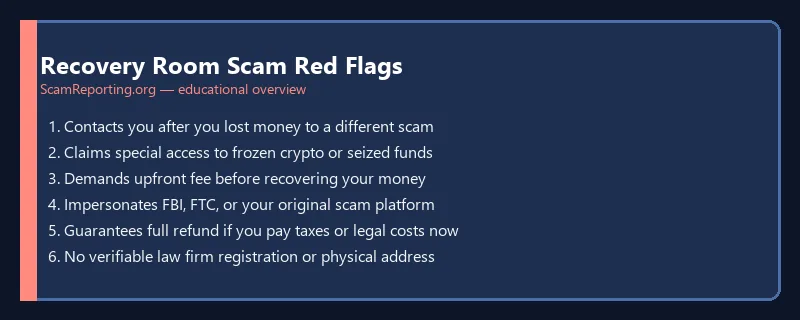
Recovery Room Scam Red Flags
- Upfront fee required before any funds are returned
- Guaranteed recovery of 100% of losses
- Unsolicited contact after you posted in forums or filed reports
- Payment by gift card, crypto, or wire only
- Requests for remote access to your computer or banking app
- Fake legal letters with misspelled agency names
- Photo IDs or badges sent by text to "verify" identity
- Pressure to act before a "deadline" expires
Who Can Actually Help
- Your bank or card issuer — if reported immediately (especially Zelle or wire)
- Law enforcement — FBI IC3, local police, FTC reports build cases but rarely return individual funds quickly
- Licensed attorneys in your state — may advise on civil options; verify bar membership
- Credit bureaus — if identity theft occurred
Legitimate investigators do not cold-call victims demanding gift cards.
What to Do Instead
- Follow our get help after a scam checklist.
- Report the original fraud and any recovery scam attempt to the FTC.
- Never pay new fees to strangers promising refunds.
- Warn others in the community forum.
- Read how to report a scam to the FTC.
Frequently Asked Questions
Can the FBI recover my scammed money?
The FBI investigates patterns; individual recovery is uncommon and never requires upfront gift card payments.
Someone found my lost crypto — is it real?
Be skeptical. Pig butchering victims are heavily targeted. See pig butchering signs.
I paid a recovery fee — what now?
Treat it as a second fraud. Report it, stop further payments, and secure accounts.
Last reviewed: July 2026. Educational content — not legal advice.
Was this guide helpful?
Your feedback helps us prioritize updates. We do not collect any personal data.
Thanks — recorded.