
Historical record: This report is older than 30 days. While the core tactics remain relevant, scammers may have evolved their methods.
Before you reply or pay
Scam Checker → Paste the text message or DM to flag payment and urgency red flags.
Protection guide: Government Impersonation Scams
Reviewed by ScamReporting.org Editorial Team · Editorial standards
Reported July 2026 — The Federal Trade Commission issued a consumer alert after a surge in FTC impersonation recovery scams. Criminals cold-text prior fraud victims, use real-sounding employee names, and attach fabricated badge photos to build false credibility.
How This Scam Works
- Cold contact: You receive an unexpected text, email, or encrypted-app message claiming an FTC agent can help recover money from a previous scam.
- Fake credentials: The sender shares a photo of an FTC employee ID, badge, or official-looking letterhead — all easy to fabricate or steal.
- Upfront fee: You’re told to pay a processing fee, legal retainer, or “verification deposit” via gift cards, Zelle, wire, or crypto.
- Safe-account trick: Some versions ask you to move remaining funds into an account the scammer controls for “protection.”
- Second loss: Victims who already lost money once are pressured emotionally — scammers exploit hope and urgency.
Red Flags
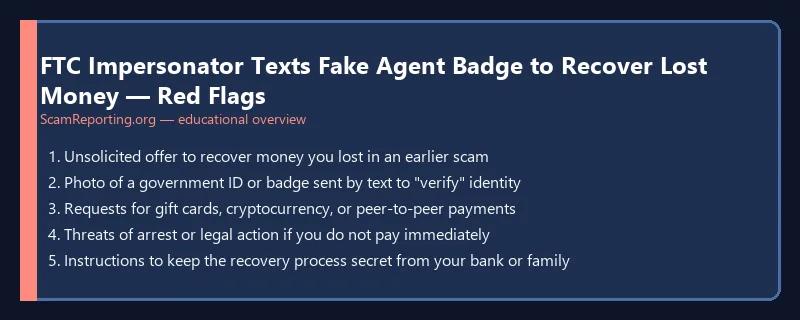
- Unsolicited offer to recover money you lost in an earlier scam
- Photo of a government ID or badge sent by text to “verify” identity
- Requests for gift cards, cryptocurrency, or peer-to-peer payments
- Threats of arrest or legal action if you do not pay immediately
- Instructions to keep the recovery process secret from your bank or family
What To Do
- Stop responding — do not send money or share financial details
- Verify independently — contact the FTC only through ReportFraud.ftc.gov, not numbers or links the scammer provides
- Warn prior victims — anyone who was scammed before is a prime target for recovery fraud
- Report impersonation at ReportFraud.ftc.gov and on our Report a Scam form
Remember: ScamReporting.org is an independent awareness platform — not law enforcement. If you sent money, contact your bank immediately and see our recovery steps.