
If you gave your Social Security number (SSN) to a scammer, assume it will be sold on fraud marketplaces. Speed matters — most identity theft damage can be limited if you act within the first 24–72 hours. For a complete reporting guide, see How to Report Identity Theft on our sister site HowToReport.org.
File with agencies: Use HowToReport.org identity theft guide for FTC, credit bureau, and scam reporting steps with phone numbers and .gov links.
Why Scammers Want Your SSN
Your SSN unlocks tax fraud, new credit accounts, medical identity theft, and unemployment benefit fraud. Scammers collect numbers through fake job applications, phishing pages, Medicare impersonation calls, and romance scams posing as military finance offices.
Immediate Steps (Do Today)
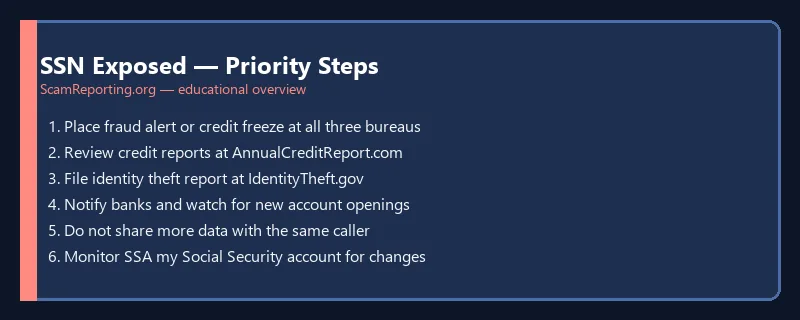
- Place a fraud alert or credit freeze at all three bureaus — Equifax, Experian, and TransUnion. A freeze is stronger and free.
- Check your credit reports at AnnualCreditReport.com for accounts you did not open.
- File an identity theft report at IdentityTheft.gov — the FTC generates a recovery plan and affidavit.
- Contact the IRS if you suspect tax-related misuse — call 800-908-4490 after filing Form 14039 if needed.
- Notify your bank and employers if the SSN was given during a fake job or direct-deposit scam.
- Document everything — screenshots, phone numbers, and the scam script. Report on our scam report form.
Monitor for 12 Months
- Watch mail for IRS notices, unfamiliar tax transcripts, or new credit cards.
- Enroll in free bureau monitoring or use a reputable identity monitoring service.
- Review Social Security earnings statements at ssa.gov/myaccount.
- Place an extended fraud alert (7 years) after filing an IdentityTheft.gov report.
Common SSN Scam Lures
- Fake job applications requesting SSN before an interview — see employment scam red flags.
- Medicare and SSA impersonation — Medicare phone scam guide.
- IRS threats demanding verification — IRS phone scam red flags.
- Phishing forms after QR or text links — QR code phishing guide.
- Romance scammers claiming they need your SSN for military leave or visa paperwork.
Report Identity Theft and Lock Down Your Credit
Giving out your SSN raises your identity-theft risk, so take the two protective steps below and keep a record of each report:
- How to report identity theft — file at IdentityTheft.gov and notify the bureaus, SSA, and IRS.
- How to freeze your credit — free at all three bureaus, blocks new-account fraud.
- How to report credit card fraud — if a card or account was misused.
Frequently Asked Questions
Can I change my Social Security number after a scam?
SSA rarely issues new numbers. Focus on freezes, monitoring, and tax protection — that is what stops most misuse.
Is a credit freeze enough?
Freezes block most new credit accounts but not all tax or medical identity theft. Pair freezes with IRS vigilance and IdentityTheft.gov reporting.
Should I pay for identity theft insurance?
Free freezes and government reporting cover essentials. Paid services add convenience, not a substitute for freezes.
Need a recovery checklist? Visit Get Help or read realistic recovery after fraud.
Was this guide helpful?
Your feedback helps us prioritize updates. We do not collect any personal data.
Thanks — recorded.