
Reporting a scam to the Federal Trade Commission (FTC) helps law enforcement track fraud patterns and supports consumer protection efforts. This guide walks you through exactly what to do after encountering fraud. For other types of fraud beyond consumer scams — including Medicare fraud, insurance fraud, and workplace issues — visit HowToReport.org.
Official reporting paths: Step-by-step agency filing on HowToReport.org — How to Report a Scam · identity theft reporting if personal data was stolen.
Before You Report: Gather Evidence
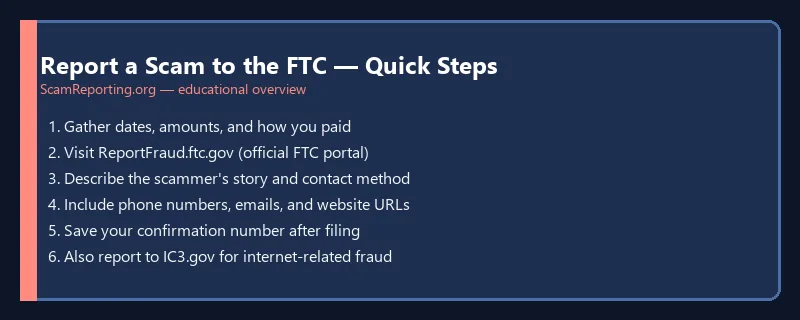
- Screenshots of emails, texts, or messages
- Sender phone numbers, email addresses, and URLs
- Payment receipts (wire, Zelle, gift card, crypto transaction IDs)
- Names and usernames used by the scammer
- Date, time, and platform where contact began
See our fraud recovery guide for immediate security steps.
Step 1: Report to the FTC
- Go to ReportFraud.ftc.gov (official FTC fraud portal)
- Click Report Now and follow the guided questionnaire
- Select the scam category (impersonation, online shopping, romance, etc.)
- Describe what happened with dates and amounts lost
- Submit — you will receive a confirmation reference number
The FTC shares reports with law enforcement partners. Individual refunds are not guaranteed, but reporting helps investigations.
Step 2: File with FBI IC3 (Internet Crimes)
For online fraud, also file at ic3.gov (Internet Crime Complaint Center):
- Visit ic3.gov and click File a Complaint
- Complete victim and transaction details
- Attach evidence if available
- Save your IC3 complaint ID
Step 3: Report Locally and to Your Bank
- Local police: File a report for documentation (useful for banks and credit bureaus)
- Your bank: Report unauthorized transfers immediately — timing matters for Zelle and wire fraud
- Credit bureaus: Place a fraud alert or credit freeze if identity theft occurred
Step 4: Report on ScamReporting.org
Help warn others by submitting details on our public report form. Community reports feed our alerts page and forum discussions.
What Happens After You Report?
Government agencies aggregate complaints to identify trends and pursue large fraud rings. You may not hear back on individual cases, but your report still matters. For financial recovery, contact your bank first — see our Zelle scam guide for P2P payment cases.
FAQ
Should I report if I didn’t lose money?
Yes — attempted scams help authorities map active campaigns.
Is ReportFraud.ftc.gov legitimate?
Yes. Always type the URL directly; do not follow links from unsolicited emails claiming to be the FTC.
Last reviewed: June 2026. Not legal advice — consult local authorities for urgent threats.
Report to Other Agencies and Channels
The FTC is the right starting point for most scams, but some cases need additional reporting. Use the guide that matches your situation:
- How to report internet fraud — FTC plus the FBI’s IC3 for online scams.
- How to report a scammer to the FBI — file an IC3 complaint for internet crime.
- How to report a scam website — flag fake stores and phishing pages to browsers and hosts.
- How to report identity theft — if your personal information was exposed.
- How to report credit card fraud — dispute unauthorized charges with your issuer.
Frequently Asked Questions
Does the FTC email about fraud refunds?
No. The FTC does not email unsolicited refund offers. Use ReportFraud.ftc.gov directly.
What information does the FTC need?
Describe what happened, when, how you were contacted, and any payments made. Screenshots help.
Will reporting get my money back?
Reporting helps law enforcement but does not guarantee recovery. See Get Help for immediate steps.
Was this guide helpful?
Your feedback helps us prioritize updates. We do not collect any personal data.
Thanks — recorded.